
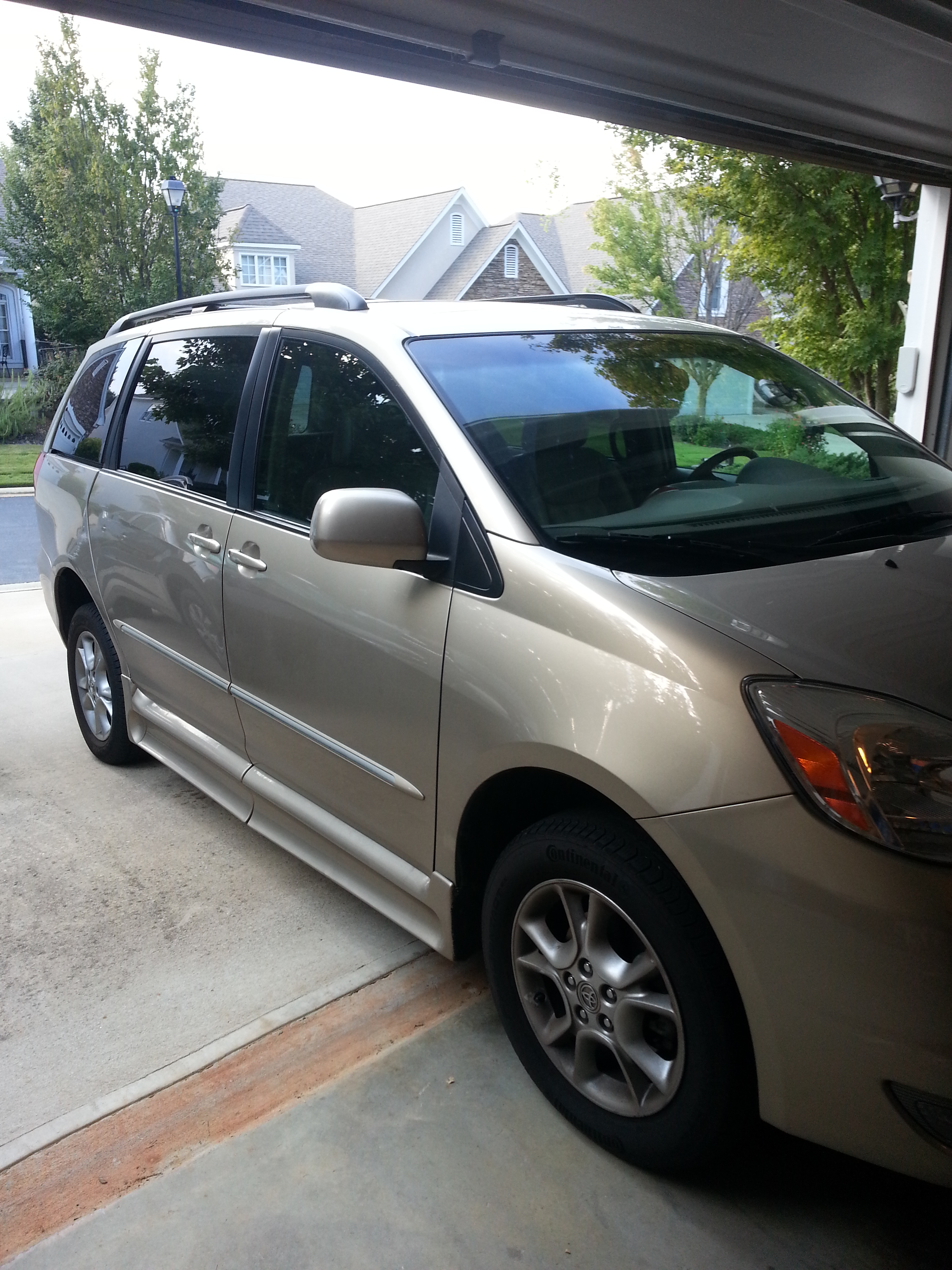
2005 Toyota Sienna Handicap Van
Within four years of Cheryl going into the wheelchair full time, we knew our days of traveling were numbered unless we purchased a van. With both of our children living in different parts of the country with our precious grandchildren, something had to be done to get us on the road more. We rented a van a couple of times to try out a modified van and found it very functional. The company who rented to us in the Atlanta area also sells handicap vans so we negotiated with them to get one built to meet our needs.
The first requirement was a basic vehicle that would be extremely reliable because breakdowns on the highway with a handicapped person was a great fear. Our preference was a Honda or Toyota for reliability but only the Toyota was capable of outfitting for a wheelchair at that time. So in 2005, we purchased a Toyota Sienna. We chose to have the middle row of seats removed to make room for the wheelchair. We then chose a built-in ramp under the vehicle that is deployed to the side of the van on the passenger side. That allows the wheelchair to be pushed directly up the ramp into the space prepared for it with no turning. This decision was made because Cheryl didn’t like the feel or the view from the passenger seat area nor did she want the option to learn to drive herself. The passenger seat spot seemed better on the surface but in reality her head would have been just above the dashboard level. That is because the floor of the van is lowered several inches when the outfitting is done and the wheelchair doesn’t sit as high as a regular car seat.
The next decision we made was possibly the most important of all. We had an EZ Lock installed in the middle of the van in the area where the wheelchair is placed. EZ Lock is a grappling mechanism bolted to the floor of the van. The wheelchair is then outfitted with a large bolt placed to fit into the EZ Lock when the wheelchair is pushed over it. The EZ Lock automatically grabs the bolt and locks the wheelchair in place. This device allows KJ to push the wheelchair into the van and lock it into position without any bending, crawling, pulling of straps, etc. When it is time to exit the van, there is a release button attached to the inside of the van wall that Cheryl presses. The wheelchair can then be pulled out with no effort. Cheryl used the normal seatbelts in the van to secure herself in the wheelchair. The seatbelts are outfitted with extenders to be able to reach around the wheelchair.
We have replaced wheelchairs more than once since purchasing the van with the EZ Lock. On those occasions, the bolt on the bottom of the wheelchair is removed and attached to the new wheelchair. We have also purchased a power chair to go along with the manual chair. Both chairs have EZ Lock bolts on them so we can use either chair in the van.
When we purchased the van, it was a special order and we had to wait about 5 months to have it delivered. The process was to go to a Toyota dealer and pick out the model we wanted. We then went to the outfitter and ordered that model with the requested accessibility modifications. (The business in the Southeast US that is the go-to provider of handicap vans is R&R Mobility.) In our case the cost of the accessibility mods amounted to about 50% of the price of the base vehicle. It is a sizable investment and one that must be done very carefully. I’m not qualified to explain all the changes made to the basic van but I will mention the major ones I know about.
The floor of the van is cut out, lowered, and re-welded to allow more head room inside for a wheelchair and its occupant. A hydraulic system is added to the van to allow the entire vehicle to lower itself about 10 inches before the wheelchair is put in or taken out. This lowering allows the ramp to be at an incline that allows easier handling of the wheelchair. Push buttons are installed on the dash and on the sidewall of the van to allow lowering of the van and deploying of the ramp with the touch of a button. All of these changes have worked beautifully for us for 10 years!
Another note concerning maintenance. Our van is approaching 100,000 miles but is still performing very well. When there is a problem or the need for preventive maintenance, it is up to KJ to determine if it is something related to the base van or to the accessibility mods. If it is the former, the van goes to a Toyota dealer. If it is the latter, it returns to R&R. Also when the van reached 8 years of age, KJ made the decision to begin doing large maintenance items prior to a failure on the highway. The Toyota dealer provided good counseling on the different systems that might fail at the age of the van. The work was spread over many months to spread the impact to our budget. After 10 years, the van has yet to breakdown on a trip, either a short one or a long one.
With our wonderfully equipped, reliable van we have made driving trips from Atlanta to Denver, Houston, Dallas, Memphis, New Orleans, Charleston, Atlantic City, Fort Lauderdale, Biloxi, and the Smoky Mountains. We travel only by driving the van and will continue that practice. It was a sizable investment but has been worth every dollar.
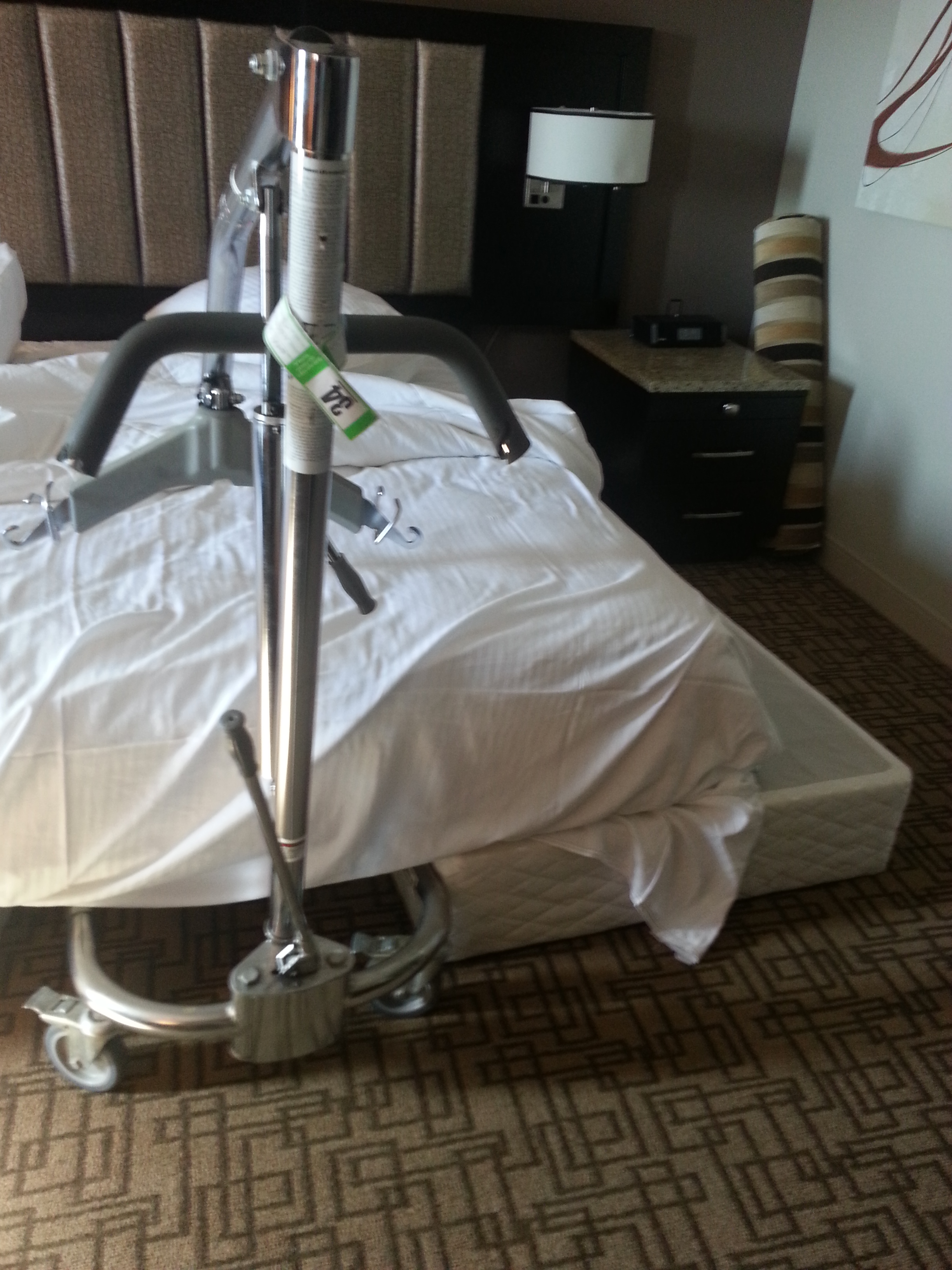
A final note: you may be wondering why we haven’t used air travel, especially for some of the more distant locations. The answer is twofold. First, the airlines are simply not equipped for a person in Cheryl’s condition. They expect her to transfer from her chair to their narrow aisle chair then to the seat when boarding. Of course, this process has to be reversed for deplaning. When we tried that, it was very obvious that just doing all that transferring was extremely tiring and stressful for Cheryl. It would also require KJ or someone else to basically lift her by hand. Second, our normal daily routine requires equipment that we would not trust to airline baggage handlers. I am talking about her wheelchair, the lift, and the limpidema device we carry for use on her legs. Flying is a non-starter for this family.

 MS Road Warriors