Tag Archives: handicapped equipment

Cruising

We have now been on five Caribbean cruises as a couple.  The first one was before Cheryl developed MS but the other four have been in the past 5 years.  Every cruise has been pleasant and enjoyable with minimal stress.  We feel that cruising is the most wheelchair friendly mode of vacationing.

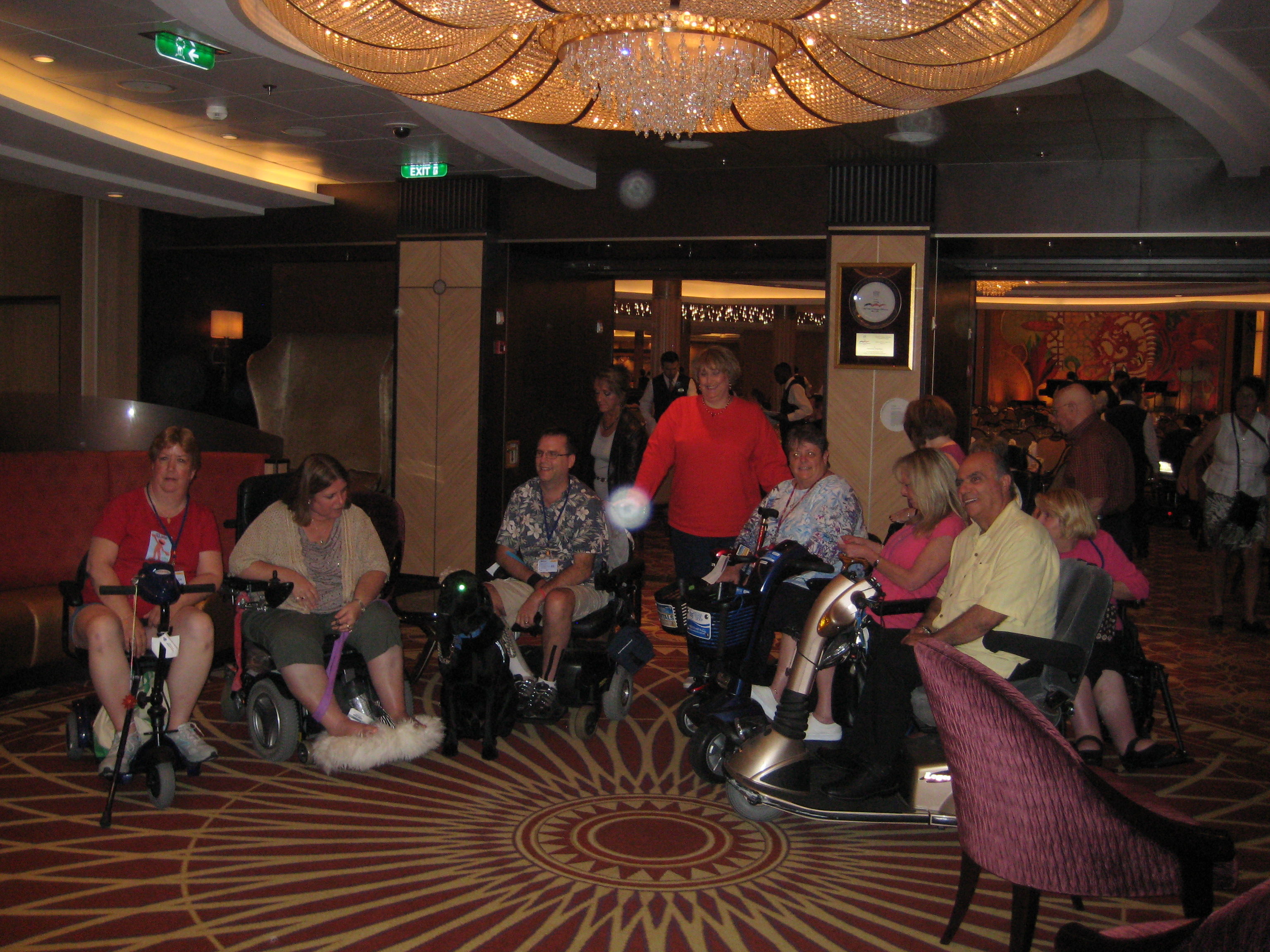
Royal Caribbean was our choice for a cruise line when we did the first one in the wheelchair. Actually it was really not our choice because we signed up to go with a group of MS patients and caregivers on a Royal Caribbean cruise.  The particular group we joined is based in Florida and is called MS Cruisers. Below is a photo of a small portion of the group on the Allure of the Seas in 2011.  We took a second cruise with MS Cruisers in 2014.  The group offers a chance to share with others dealing with MS in a setting that is very nice and comfortable.IMG_2957
Once we experienced a Royal Caribbean vacation, there has been no desire to move to a different cruise line.  As with so many things in traveling with an MS patient, once we discovered the great service and accommodations offered by Royal Caribbean, we stuck with it.   We have our sixth cruise already booked for early 2016.IMG_3621

All our cruises have been to the Caribbean for two reasons.  First, we love the blue water, white sand beaches, and the people of the Caribbean.  Second, living in Atlanta and traveling only by van, Florida departure ports launching cruises to the Caribbean are the most accessible ones for us.  We have cruised to these islands in the past five years:  Cozumel, Jamaica, Coco Cay and Nassau in the Bahamas, Labadee (Haiti), St. Maartens, St. Thomas, and Grand Cayman.

Royal Caribbean gets an A+ rating from us because of the helpfulness of all their staff, especially for wheelchair bound passengers.  We have traveled on one of their largest ships from the Oasis class (Allure of the Seas) and on smaller ones.  We cruised on Freedom of the Seas (Freedom class) twice and found it very comfortable and plenty large.  Last year we cruised on Explorer of the Seas (the smaller Voyager class).  It was also large enough but wasn’t as well maintained as the previous ships.  We were told that it was heading for dry dock very soon which indicates it was time for refurbishment.  In the future, we will ask when a ship was last in dry dock before booking.

The food and drink on Royal Caribbean is stellar.  We have never received a bad meal in the dining room and have always found the Windjammer buffet for breakfast and lunch to be extremely good.  The food and drink staff is so helpful, accommodating, and friendly plus being entertaining at times.  Entertainment onboard is also excellent.  The musical shows in the theater are first class and we always enjoy the ice show.  There are movies and the casino plus lots of interesting people-watching.

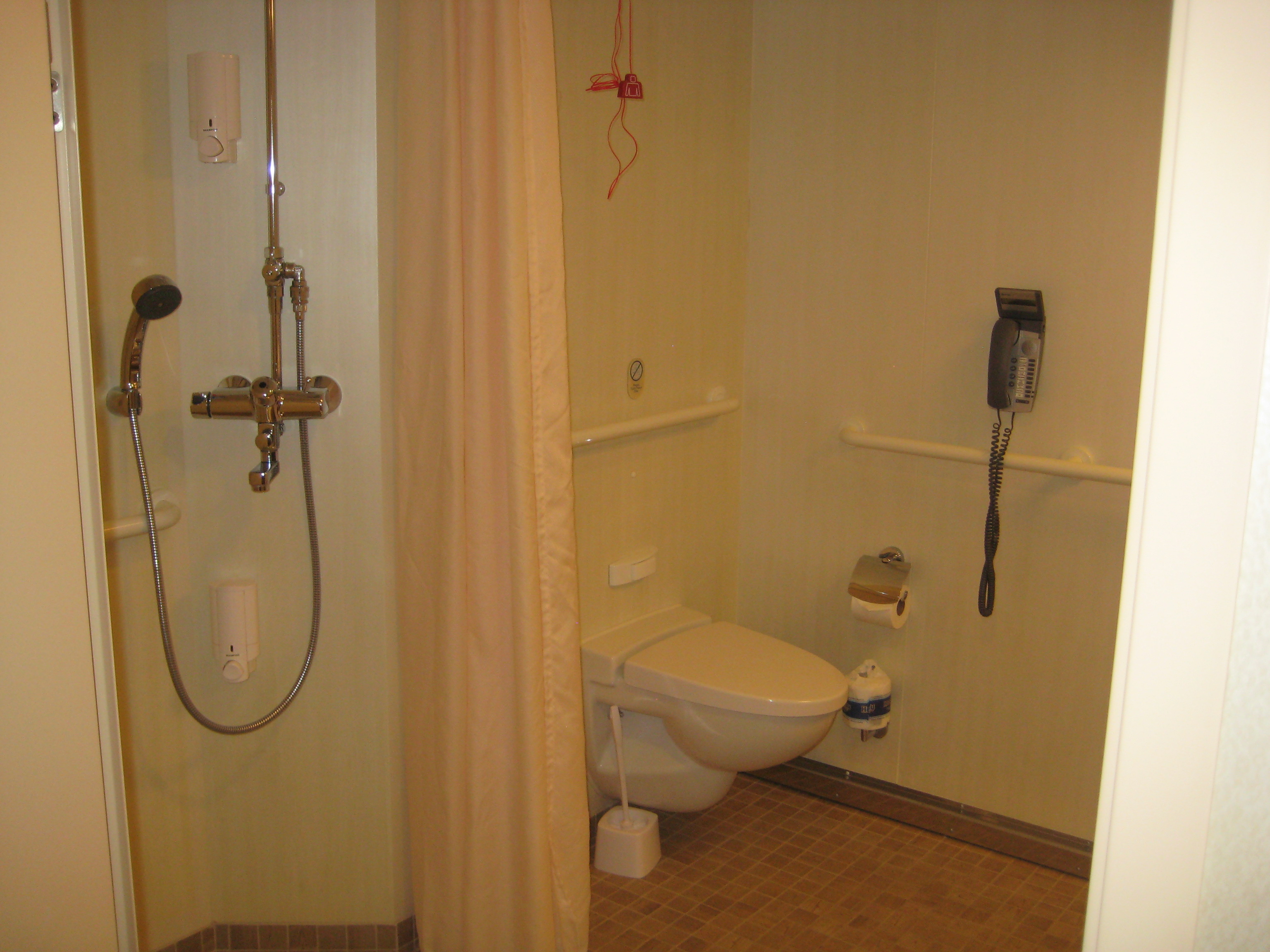
The wheelchair accessible rooms are truly that.  The sleeping area is comfortable and the bed accommodates our lift.  The bathroom is not large but is arranged strategically to provide ease of movement for the chair or the lift.  The stewards for our rooms have also been extremely proficient and accommodating.
IMG_2902 IMG_2900

A Handicapped Vehicle

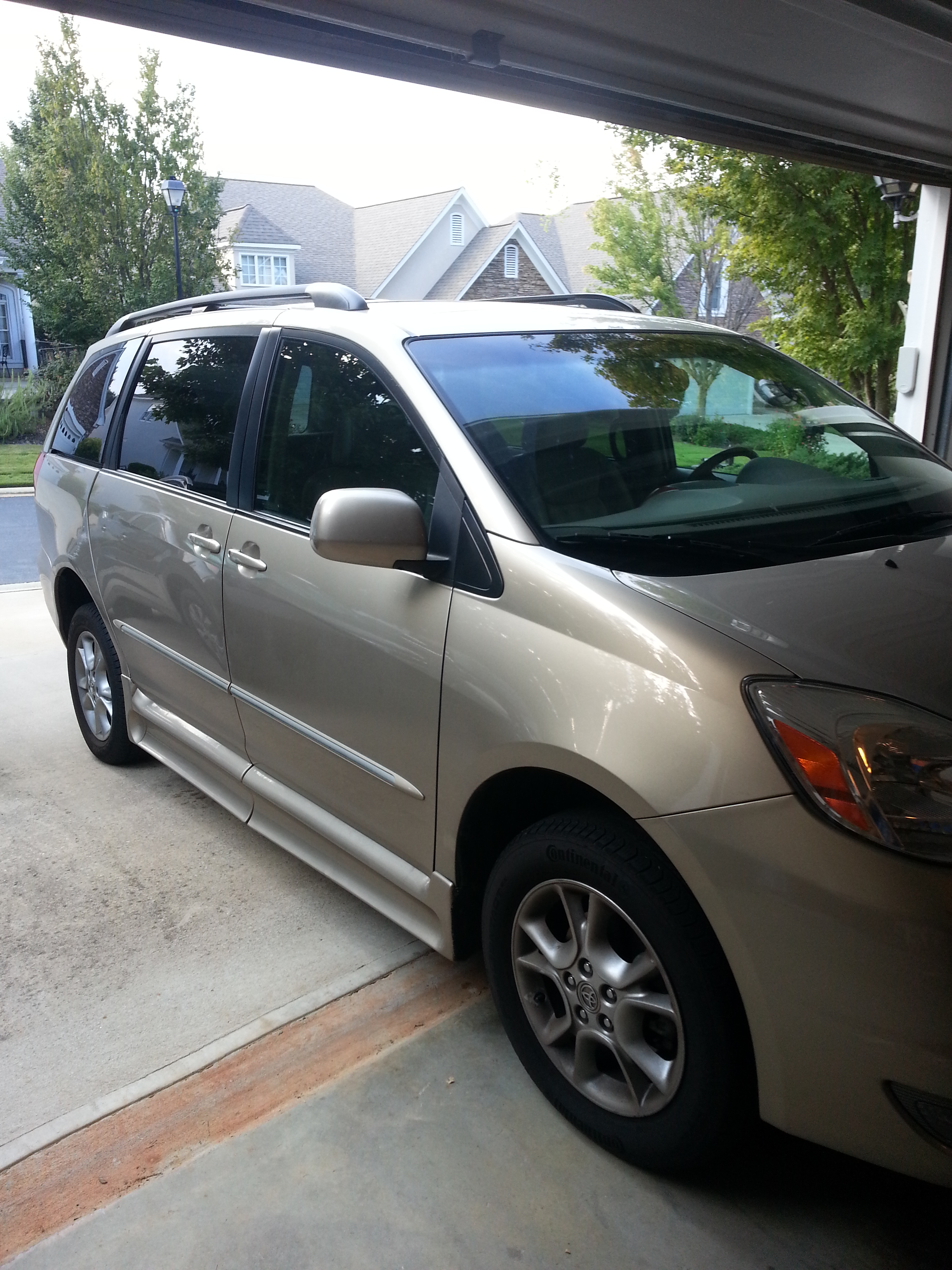
2005 Toyota Sienna Handicap Van

2005 Toyota Sienna Handicap Van

Within four years of Cheryl going into the wheelchair full time, we knew our days of traveling were numbered unless we purchased a van.  With both of our children living in different parts of the country with our precious grandchildren, something had to be done to get us on the road more.  We rented a van a couple of times to try out a modified van and found it very functional.  The company who rented to us in the Atlanta area also sells handicap vans so we negotiated with them to get one built to meet our needs.

The first requirement was a basic vehicle that would be extremely reliable because breakdowns on the highway with a handicapped person was a great fear.  Our preference was a Honda or Toyota for reliability but only the Toyota was capable of outfitting for a wheelchair at that time.  So in 2005, we purchased a Toyota Sienna.  We chose to have the middle row of seats removed to make room for the wheelchair.  We then chose a built-in ramp under the vehicle that is deployed to the side of the van on the passenger side.  That allows the wheelchair to be pushed directly up the ramp into the space prepared for it with no turning.  This decision was made because Cheryl didn’t like the feel or the view from the passenger seat area nor did she want the option to learn to drive herself. The passenger seat spot seemed better on the surface but in reality her head would have been just above the dashboard level.  That is because the floor of the van is lowered several inches when the outfitting is done and the wheelchair doesn’t sit as high as a regular car seat.

The next decision we made was possibly the most important of all.  We had an EZ Lock installed in the middle of the van in the area where the wheelchair is placed.  EZ Lock is a grappling mechanism bolted to the floor of the van.  The wheelchair is then outfitted with a large bolt placed to fit into the EZ Lock when the wheelchair is pushed over it.  The EZ Lock automatically grabs the bolt and locks the wheelchair in place.  This device allows KJ to push the wheelchair into the van and lock it into position without any bending, crawling, pulling of straps, etc.  When it is time to exit the van, there is a release button attached to the inside of the van wall that Cheryl presses. The wheelchair can then be pulled out with no effort.  Cheryl used the normal seatbelts in the van to secure herself in the wheelchair.  The seatbelts are outfitted with extenders to be able to reach around the wheelchair.

We have replaced wheelchairs more than once since purchasing the van with the EZ Lock.  On those occasions, the bolt on the bottom of the wheelchair is removed and attached to the new wheelchair.  We have also purchased a power chair to go along with the manual chair.  Both chairs have EZ Lock bolts on them so we can use either chair in the van.

When we purchased the van, it was a special order and we had to wait about 5 months to have it delivered.  The process was to go to a Toyota dealer and pick out the model we wanted.  We then went to the outfitter and ordered that model with the requested accessibility modifications.  (The business in the Southeast US that is the go-to provider of handicap vans is R&R Mobility.)  In our case the cost of the accessibility mods amounted to about 50% of the price of the base vehicle.  It is a sizable investment and one that must be done very carefully.  I’m not qualified to explain all the changes made to the basic van but I will mention the major ones I know about.

The floor of the van is cut out, lowered, and re-welded to allow more head room inside for a wheelchair and its occupant.  A hydraulic system is added to the van to allow the entire vehicle to lower itself about 10 inches before the wheelchair is put in or taken out.  This lowering allows the ramp to be at an incline that allows easier handling of the wheelchair.  Push buttons are installed on the dash and on the sidewall of the van to allow lowering of the van and deploying of the ramp with the touch of a button.   All of these changes have worked beautifully for us for 10 years!

Another note concerning maintenance.  Our van is approaching 100,000 miles but is still performing very well.  When there is a problem or the need for preventive maintenance, it is up to KJ to determine if it is something related to the base van or to the accessibility mods.  If it is the former, the van goes to a Toyota dealer.  If it is the latter, it returns to R&R.  Also when the van reached 8 years of age, KJ made the decision to begin doing large maintenance items prior to a failure on the highway.  The Toyota dealer provided good counseling on the different systems that might fail at the age of the van.  The work was spread over many months to spread the impact to our budget.  After 10 years, the van has yet to breakdown on a trip, either a short one or a long one.

With our wonderfully equipped, reliable van we have made driving trips from Atlanta to Denver, Houston, Dallas, Memphis, New Orleans, Charleston, Atlantic City, Fort Lauderdale, Biloxi, and the Smoky Mountains.  We travel only by driving the van and will continue that practice.  It was a sizable investment but has been worth every dollar.

A final note:  you may be wondering why we haven’t used air travel, especially for some of the more distant locations.  The answer is twofold.  First, the airlines are simply not equipped for a person in Cheryl’s condition.  They expect her to transfer from her chair to their narrow aisle chair then to the seat when boarding.  Of course, this process has to be reversed for deplaning.  When we tried that, it was very obvious that just doing all that transferring was extremely tiring and stressful for Cheryl.  It would also require KJ or someone else to basically lift her by hand.  Second, our normal daily routine requires equipment that we would not trust to airline baggage handlers.  I am talking about her wheelchair, the lift, and the limpidema device we carry for use on her legs.  Flying is a non-starter for this family.

Hotel Issues With Our Lift

As I discussed in the previous post, we travel with a manual Hoyer lift to be able to transfer Cheryl between the wheelchair and the bed or toilet.  The lift remains in one piece so it can be rolled around in the hotels.  We are using bellmen where they are available at the hotels and have had no problem with them handling the lift without damaging it.

The big problem with hotels for the past few years is around the beds.  We noticed that many hotels were beginning to use wood platforms under their beds.  These are boards that are recessed a few inches under the box springs and mattress of the bed and go all away around.  Such boards make the use of the lift impossible because the feet of the lift must slide under the bed so that Cheryl is positioned over the mattress.  A normal bed on a frame with open space between the floor and bed, like we have at home, is the type of bed the Hoyer lifts were designed for.

We have had numerous conversations with hotel management and with hotel chains to understand their rationale for the platforms.  The only reason given to us is that it prevents items from rolling under the bed out of sight and thus left behind by guests.  So the reason for the platforms is convenience for the hotel guests.  Clearly this is a decision made by people who do not understand the challenges of those with mobility issues.

In all our encounters with the platform beds, no hotel has been prepared to temporarily remove the platform for us.  To do this would require platforms that are removable so that the bed frame remains. It would also require staff on hand to do the platform removable.  Hotels can not typically handle both of these needs.

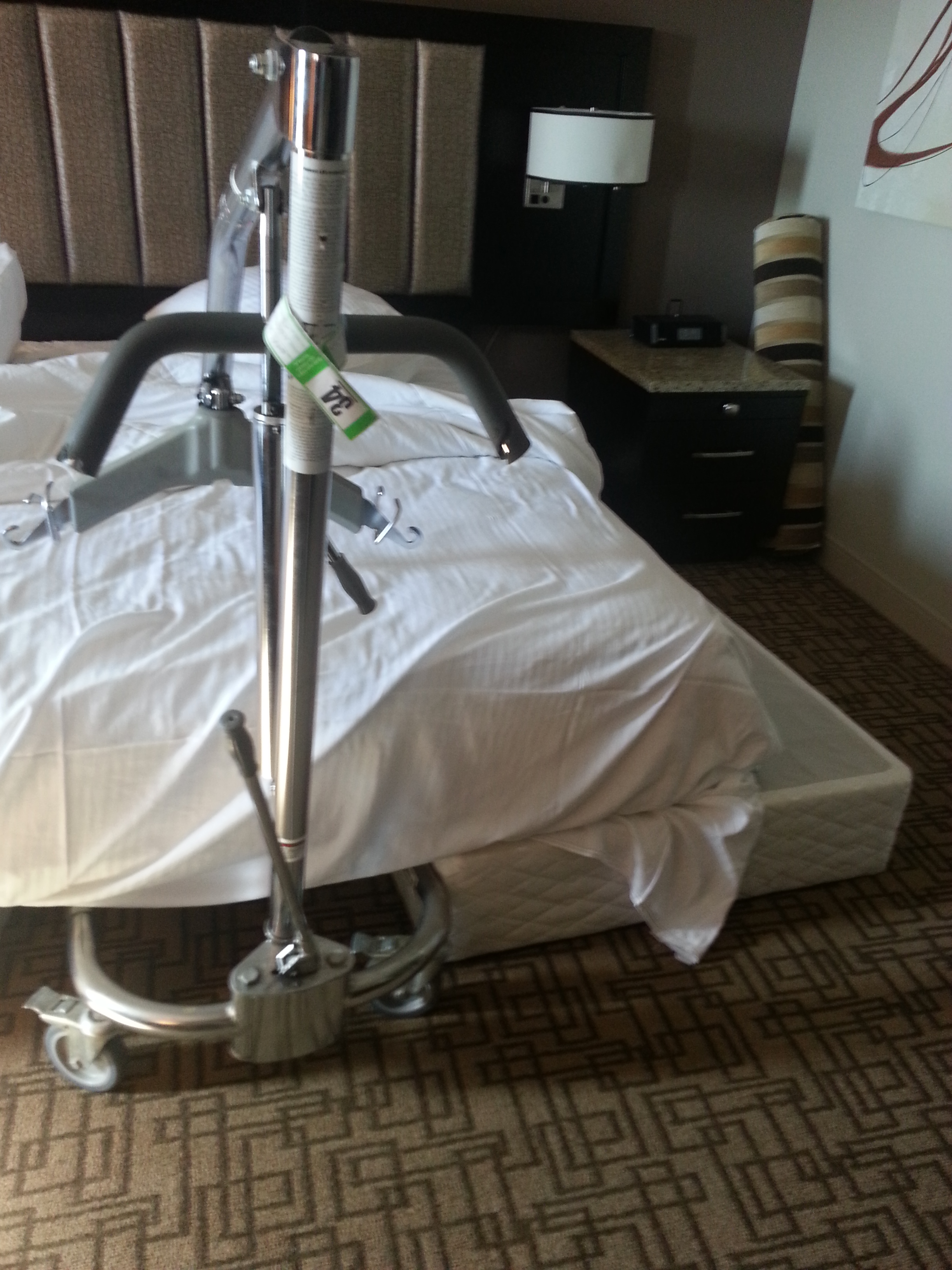
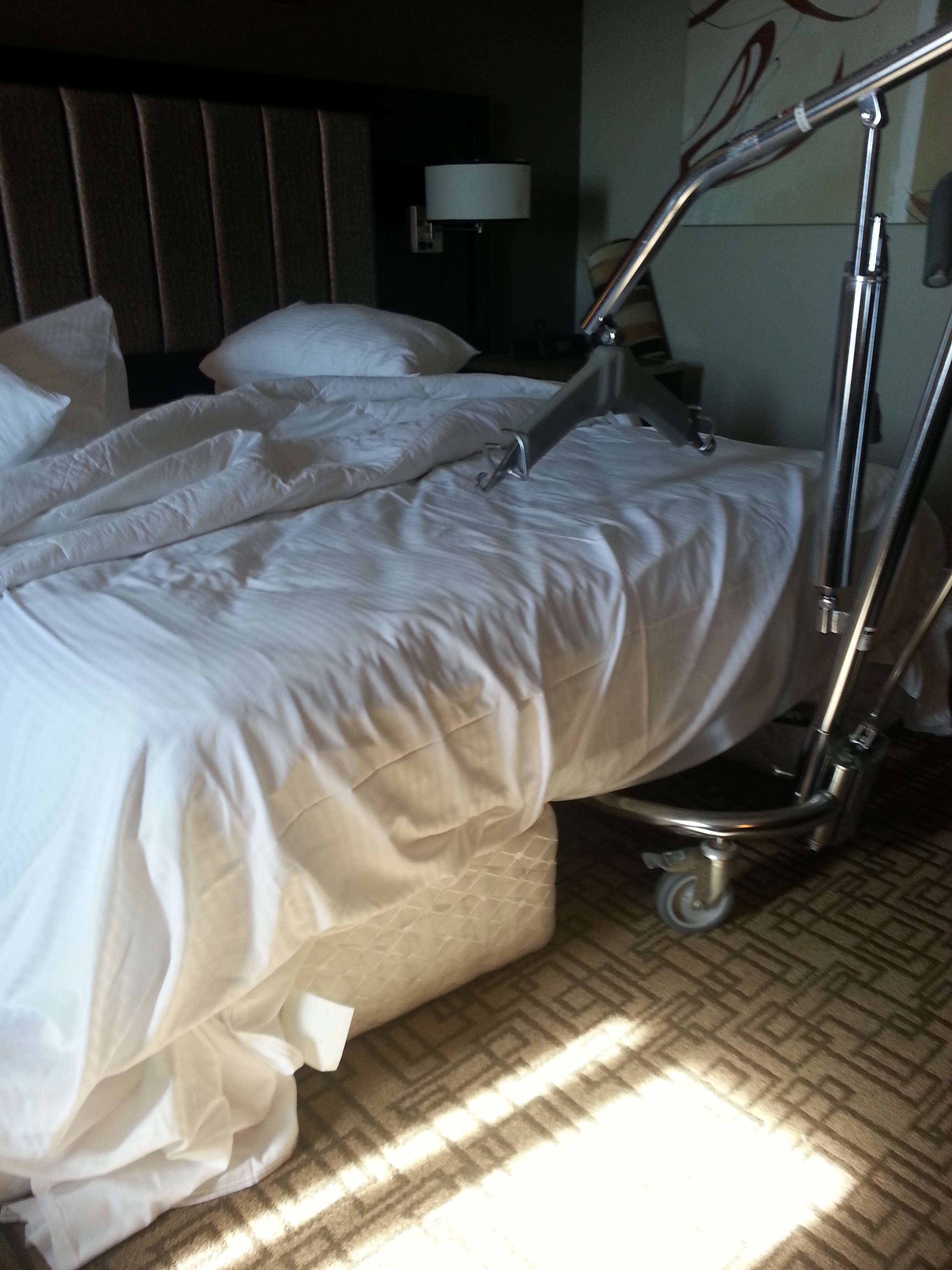
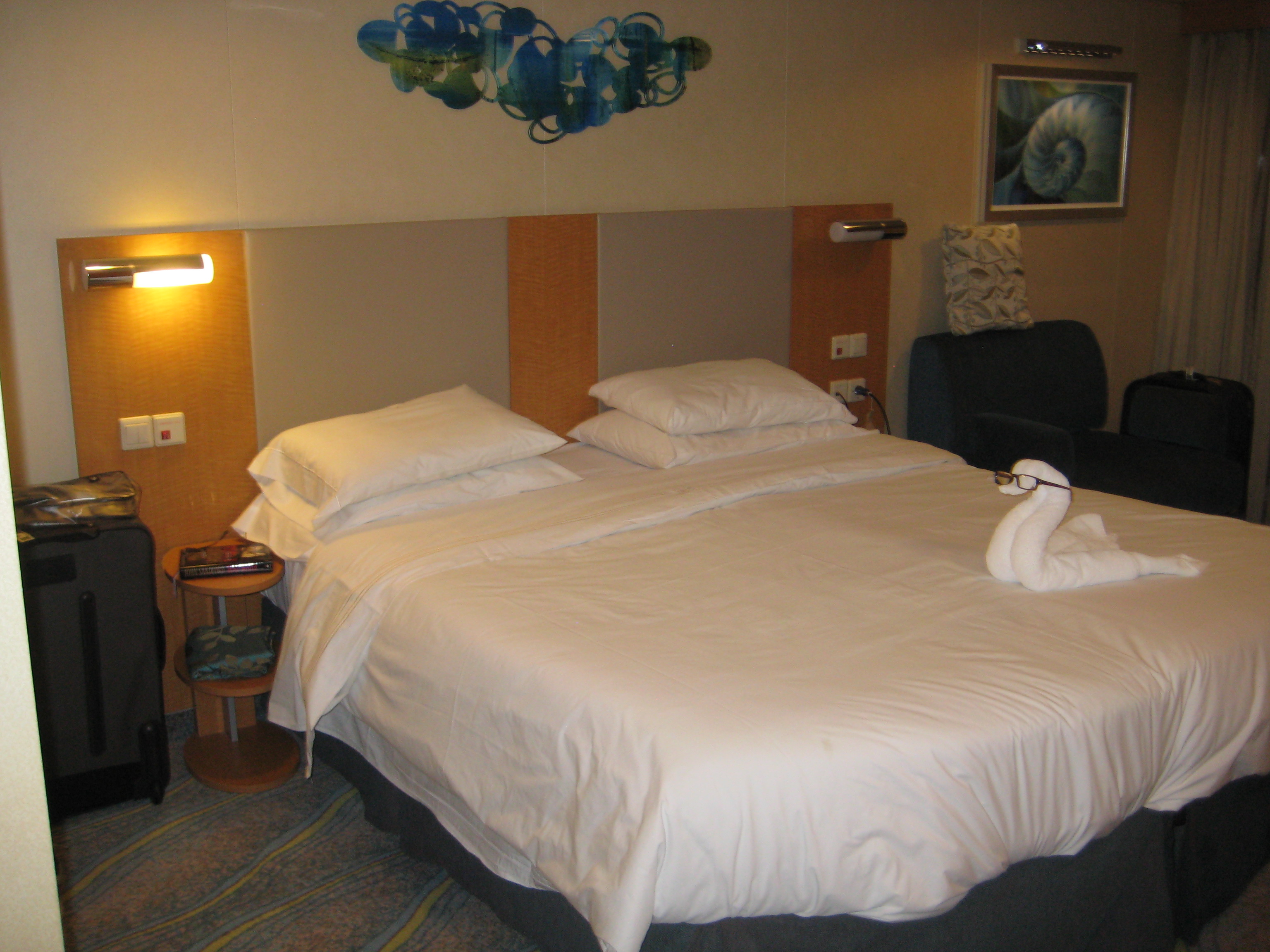
Recently on a trip to Biloxi to the Golden Nugget, we encountered a very dedicated hotel staffer with a creative approach.  We had a king sized bed with 2 box springs under the mattress.  She had the platform removed which took the frame as well, leaving the box springs and mattress sitting directly on the carpet.  Obviously, this allowed no access under the bed for the lift.  However, once the hotel staffer saw the lift and understood our dilemma, she developed a creative solution that worked for us for two nights.  The box springs were moved apart so there was an opening for the lift between them. The mattress remained on top and across the opening.  See the photos below to see the end result. 20150715_171929

Creative solution at one hotel.

Creative solution at one hotel.

This solution worked because the mattress was a good one and was able to bridge the opening while still providing support.

Another glimmer of hope for us is that recently we have been able to find a few hotels who are no longer using the platforms under the beds in their wheelchair accessible rooms.  One of our favorite hotels is Hampton Inn and we can usually find one of them that has a room with the bed on a regular bed frame.  Our hope is that all the hotel chains will at least remove the platforms in all of their wheelchair accessible rooms.

One other option KJ has developed for travel is an adjustment to the Hoyer lift.  In some cases we have found beds on frames but the height above the floor is insufficient for the lift to be pushed under.  He went to Home Depot and bought caster wheels for the front legs of the lift that are not as tall as the regular wheels.  He carries wrenches on trips so that in a few minutes he can swap out the wheels, lowering the lift legs by a couple of inches.  The wheels on the lift are 5″ wheels and the replacement wheels are 3″.  The dis-advantage to the smaller wheels is they are much harder to push on carpet.

Our normal practice now is to contact the hotel we have selected directly before we depart to ask if the bed is on a platform. We frequently make reservations online or through 800 numbers for the chains to get better rates.  The fact remains that only the local hotel staff can assure us the bed is not on a platform. Even with the process we have been burned because the hotel staff really didn’t understand what we were asking when we called them directly.  Or they were just guessing or, worse yet, lying.  I choose to believe it is not the latter.  We have made and cancelled many reservations because we could not be guaranteed a room with the bed on a frame.  It requires persistence and patience to make sure before departure that we will find a room that accommodates our needs. Driving 6, 8, or even 10 hours only to find a room doesn’t work is an instant stress builder, something neither one of us needs.

Transfers

From the time Cheryl lost her ability to stand, the problem of transferring in and out of the wheelchair became overwhelming.  She didn’t have the strength to use a transfer board to move herself.  KJ had back issues and was unable to lift her, even with a lifting belt.  We were dependent on Cheryl’s ability to stand for many years and without that we found ourselves in compromised positions more than once.  It is difficult to maintain one’s dignity when outsiders are needed for simple tasks like getting in/out of bed or on/off the toilet.

After some trial and error, we settled on a Hoyer lift as our solution to the problem.  We rented a power lift that folded up for a trial period.  Our insurance would not pay for that device so we backed off to a manual lift with a hydraulic pump.  We still have that original lift and use it for traveling.  That is because it fits in our handicapped van without being broken down into pieces.  It also rolls through hotel lobbies and cruise ships relatively easily.

As KJ’s back problems became more severe (ultimately requiring surgery), we investigated a power lift once again. Nothing had changed with our insurance (it would not pay for a power lift) but we made a deal.  Insurance paid the amount they would have paid to replace the manual lift and we paid the difference to get the power lift.  That lift has a larger footprint than the manual lift and is harder to break down into pieces.  However, it does offer major relief for KJ’s back and is well worth the outlay we made.

In our next Blog entry, we will explain the challenges we have faced using our lift in hotels.